

Riftbound-Sets
Alle 10 Sets erfasst, 1.290 Karten im Gesamtwert von $78,16K. Jeder Set-Index ist der durchschnittliche Kartenpreis des Sets, dargestellt über die letzten 30 Tage.

Origins

Spiritforged

Unleashed

Vendetta

Proving Grounds
Promo- und Organized-Play-Karten
Giveaway-, Judge- und Event-Karten, 127 Druckvarianten, die man erhält oder überreicht bekommt, statt sie als versiegeltes Set zu kaufen.

Riftbound Organized Play Promotional Cards

Riftbound Promotional Cards

Unleashed: Promos

Riftbound Judge Promotional Cards
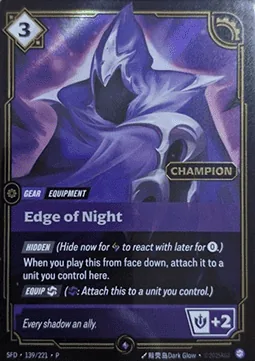
Spiritforged: Promos
Wie diese Zahlen zustande kommen
Jede Zahl auf dieser Seite, und was sie aussagt und was nicht.
Set-Index
Gesamtwert ÷ Anzahl der Karten- Add up what all 352 cards in the set cost. That comes to $30.495,89, the total value.
- Divide by how many cards there are:
$30.495,89 ÷ 352 = $86,64 - That $86,64 is the set index, what a card in Origins would cost if every card cost the same. It sits above the $0,034 median because a small number of expensive cards pull the average up.
Every card counts once, however many copies exist. Riftbound publishes no print-run numbers, so nothing can be weighted by how rare it actually is.
Gesamtwert
Summe der Preise aller Karten des SetsWas je ein Exemplar jeder Karte des Sets zu aktuellen Preisen kosten würde, die Rechnung eines Komplettisten, keine Marktkapitalisierung. Der Wert skaliert mit der Setgröße: Ein Set mit 358 Karten übertrifft ein Promo-Set mit 3 Karten fast unabhängig von der Kartenqualität.
Median-Karte
mittlerer Preis, wenn das Set sortiert wirdDie Hälfte der Karten liegt darunter. Lesen Sie den Wert gegen den Set-Index: Ein Set kann im Schnitt 36 $ erreichen, während sein Median bei 1 $ liegt, das heißt, eine Handvoll Chase-Karten trägt nahezu den gesamten Wert, während die typische Karte fast nichts wert ist. Liegen beide nah beieinander, ist das Set gleichmäßig bepreist.
Veränderung 24 Std. / 7 T / 30 T
(Index heute − Index vor N Tagen) ÷ Index vor N TagenDer gesamte Set-Index wird mit dem Preis jeder Karte an jenem vergangenen Tag neu berechnet und dann mit heute verglichen. Der Warenkorb ist auf beiden Seiten identisch, die Zahl zeigt also echte Preisbewegung und nicht Karten, die dem Set zu- oder abgegangen sind.
30-Tage-Chart
Set-Index, neu berechnet für jede der letzten 31 TagesaufnahmenEin Punkt je gespeichertem Tag, beginnend genau 30 Tage zurück und endend heute. Der Startpunkt ist so gewählt, dass er zur 30-Tage-Zahl daneben passt. Richtung der Linie und Prozentwert können also nie auseinanderlaufen.
Zusammensetzung
Anteil nach Kartenanzahl · Anteil am GesamtwertDasselbe Set aus zwei Blickwinkeln. Nach Anzahl zeigt, wie viele Druckvarianten auf jede Seltenheit entfallen; nach Wert, wie viel des Geldes im Set jede Seltenheit hält. Der Abstand dazwischen ist der Punkt, in einem Set, das sie druckt, können Showcase-Karten ein Sechstel der Anzahl und nahezu den gesamten Wert ausmachen.
Preisverteilung
Karten, gruppiert in feste PreisklassenFür jedes Set dieselben sechs Klassen, damit sie vergleichbar bleiben. Die Seltenheit allein sagt nicht, was eine Karte kostet, das hier schon. Achten Sie auf die Spalte mit der Anzahl gegenüber der mit dem Wert: Die günstigste Klasse ist meist die größte und fast nichts wert.
Erfasste Karten
Druckvarianten aus dem Riftcodex-KatalogJede eigenständige Druckvariante, wobei Alternate Arts, Signatures und Overnumbered getrennt gezählt werden, nachdem Einträge zusammengeführt wurden, die dieselbe physische Karte beschreiben.
Woher die Daten stammen
Der Kartenkatalog, also Namen, Sets, Seltenheiten, Artwork und Erscheinungsdaten, stammt von der Riftcodex-API, die selbst keinerlei Preise führt. Die Preise kommen von einem separaten, austauschbaren Anbieter und werden über die TCGplayer-ID jeder Karte mit dem Katalog verknüpft. Dieser Build verwendet Live-Preise von tcggo.
Prozentuale Veränderungen reichen nur so weit zurück wie der gespeicherte Verlauf. Jeder Sync hängt eine Tagesaufnahme an, daher werden die 7- und 30-Tage-Werte belastbarer, je länger der Tracker läuft.